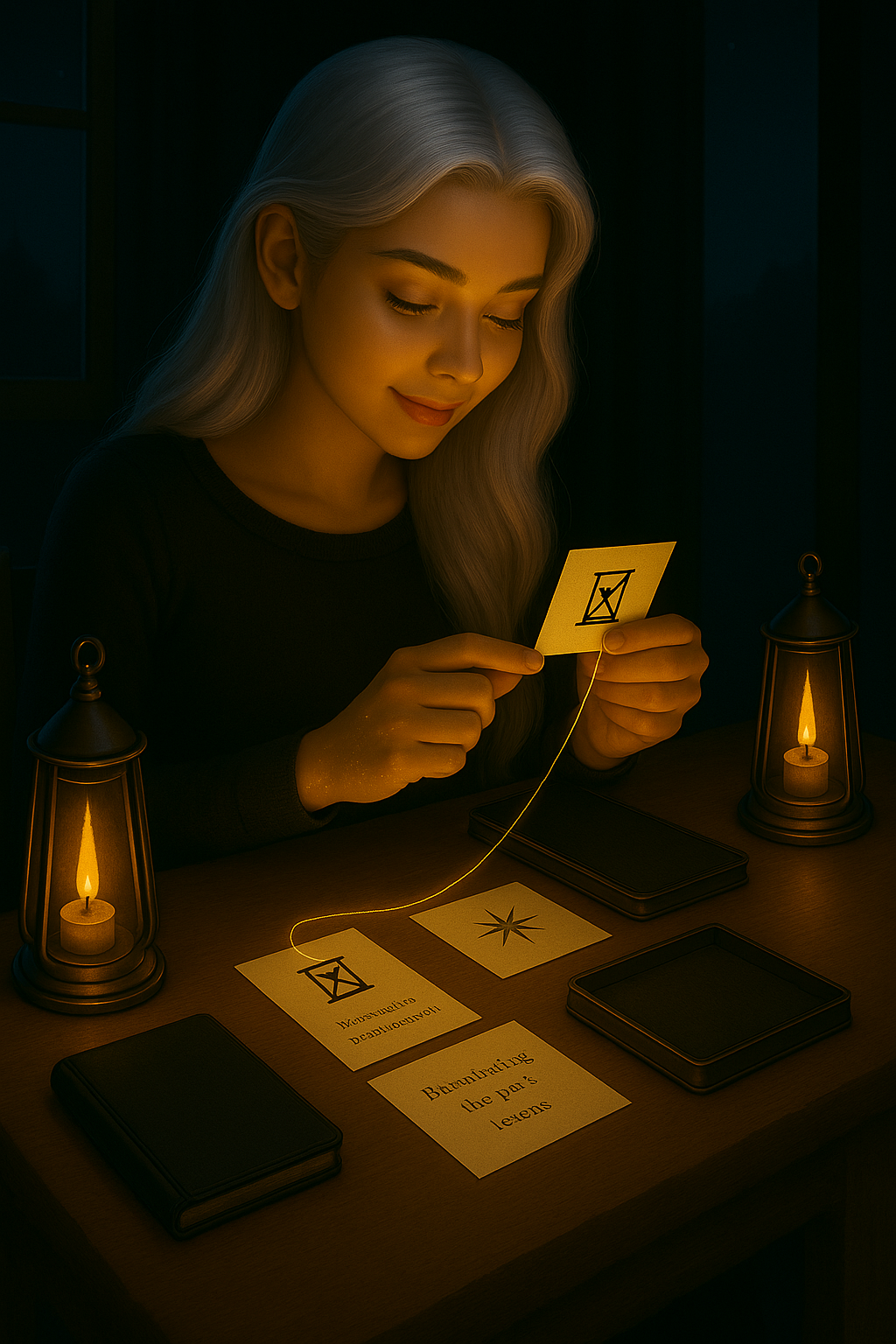
“Moments don’t become memories on their own. They’re kept by the ones who pause to notice.”
Summary
Most of life happens between moments of noticing. The five seconds after something ends can be a window where experience is either lost or stored. Neuroscience shows that these event boundaries act like mental bookends: they tell the brain, this mattered. Keep it! When we pause here, even briefly, we strengthen the memory trace and increase the chance that the moment will replay later during rest or sleep.
The research reveals how a five-second micro-prompt such as a single sentence, a sensory capture, or a one-line note activates a chain reaction known as event segmentation → retrieval practice → autobiographical reconstruction. Each reflection adds a “thread” to our identity, connecting scattered days into a coherent self-narrative over time.
The effects go beyond memory. Pausing at boundaries improves attention, reduces reactivity, and increases perceived control. Studies show that people who use boundary-timed reflections not only remember more but also report stronger self-trust and continuity. The feeling that “I am still me” even as circumstances change. Over weeks, these tiny notes form an archive of self-evidence: proof that you showed up, noticed, learned, and continued.
Practices like micro-journaling, five-second pauses, and sensory captures share a common logic: they transform fleeting perception into enduring coherence. By marking the edge between moments, we teach the nervous system to encode the right details and over time, that precision builds identity.
Reflection Prompts
- Think of a recent day that vanished into a blur, What boundaries (start, finish, or transition) could have been marked with a five-second note or breath?
- What are the first five seconds after something ends usually like for you? Are you rushing ahead, numbing out, or quietly landing?
- How might consistent, boundary-timed pauses shift your sense of time, memory, or self-trust over the next week?
Micro Practice of the Week
The Five-Second Journal Practice
- Pause at a boundary: When something like a call, a task or a workout ends, stop for five seconds.
- Breathe once. Feel your body land where you are.
- Write one line: “After [event], I [felt/noticed/learned]…”
- Tag it: Add one word that captures tone or theme (steady, tense, hopeful, curious).
- Weekly review: On Sunday, skim your notes. Circle one that still feels alive and write a single sentence about what it taught you.
Repeat this for 7 days. If you notice your week stretching, that’s your brain responding to boundaries.
Leave a Reply