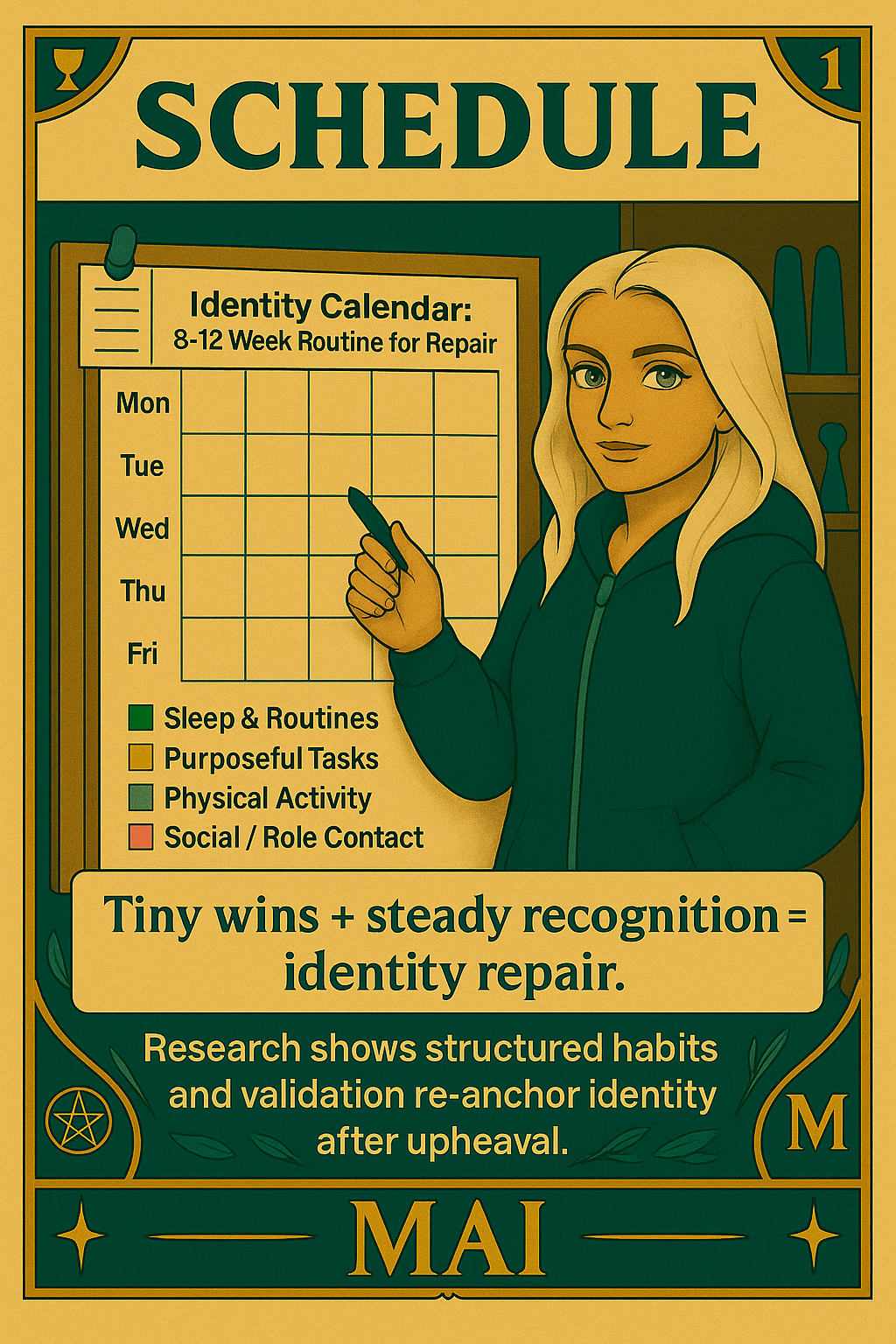
This research explores how men rebuild their sense of self after major life upheavals—job loss, divorce, bereavement, or retirement. Instead of focusing only on symptom relief, the study centers identity reconstruction: how men regain competence, purpose, and a coherent life story when roles that once defined them collapse.
The evidence converges on five daily habit domains that reliably support identity repair:
- Structured physical activity – movement routines restore bodily agency and self-efficacy.
- Stable sleep and daily structure – consistent rhythms regulate mood and anchor continuity.
- Role-validating social contact – peers and communities reinforce identity through recognition.
- Purposeful tasks – work, volunteering, or caregiving supply meaning and public roles.
- Graded skill practice – reskilling or hobby mastery creates visible progress and “small wins.”
The mechanisms are simple but powerful. Frequent small wins rebuild competence. Sleep and exercise stabilize emotion regulation. Social validation re-anchors disrupted roles, turning private progress into public recognition. Mindfulness and narrative approaches—journaling, storytelling, reframing—reduce rumination, but they work best when paired with action and mastery.
Case studies illustrate this in practice: workforce programs blending retraining with behavioral activation accelerate re-employment and confidence; Men’s Sheds use peer projects to transform isolation into purpose; digital habit apps, when paired with human coaches, help bereaved men sustain routines; and veteran reintegration programs combine physical training, peer groups, and supported employment to rebuild civilian identity.
The strongest model is multi-component and blended: structured routines plus mastery experiences, reinforced by social validation, delivered through digital scaffolds that are moderated by humans. Digital tools alone face high attrition and equity risks; privacy and inclusion safeguards are non-negotiable. Programs that pair accessible habit scaffolds with peer accountability and vocational pathways show the fastest and most durable gains.
The big takeaway: Identity repair doesn’t happen through reflection alone—it’s rebuilt through routine, mastery, and recognition. When men re-establish daily structure, create small but visible wins, and have those wins validated by others, they recover not just function, but a coherent, resilient sense of self.
Research: https://drive.google.com/file/d/1iGi55pGAM_vn1WLF2fR5sG-ZRwheZAlL/view?usp=sharing
Leave a Reply