This research examines what truly makes mentorship effective for young men today—and whether digital spaces like podcasts or online groups can fill the gaps left as traditional mentoring structures decline.
Historically, boys found guidance in sports teams, apprenticeships, and community groups. But these spaces have weakened just as digital media has surged. The study synthesizes decades of mentoring evaluations, meta-analyses, and recent digital case studies to answer two questions: which mentor qualities matter most, and how do digital channels measure up?
Five mentor qualities consistently drive positive outcomes:
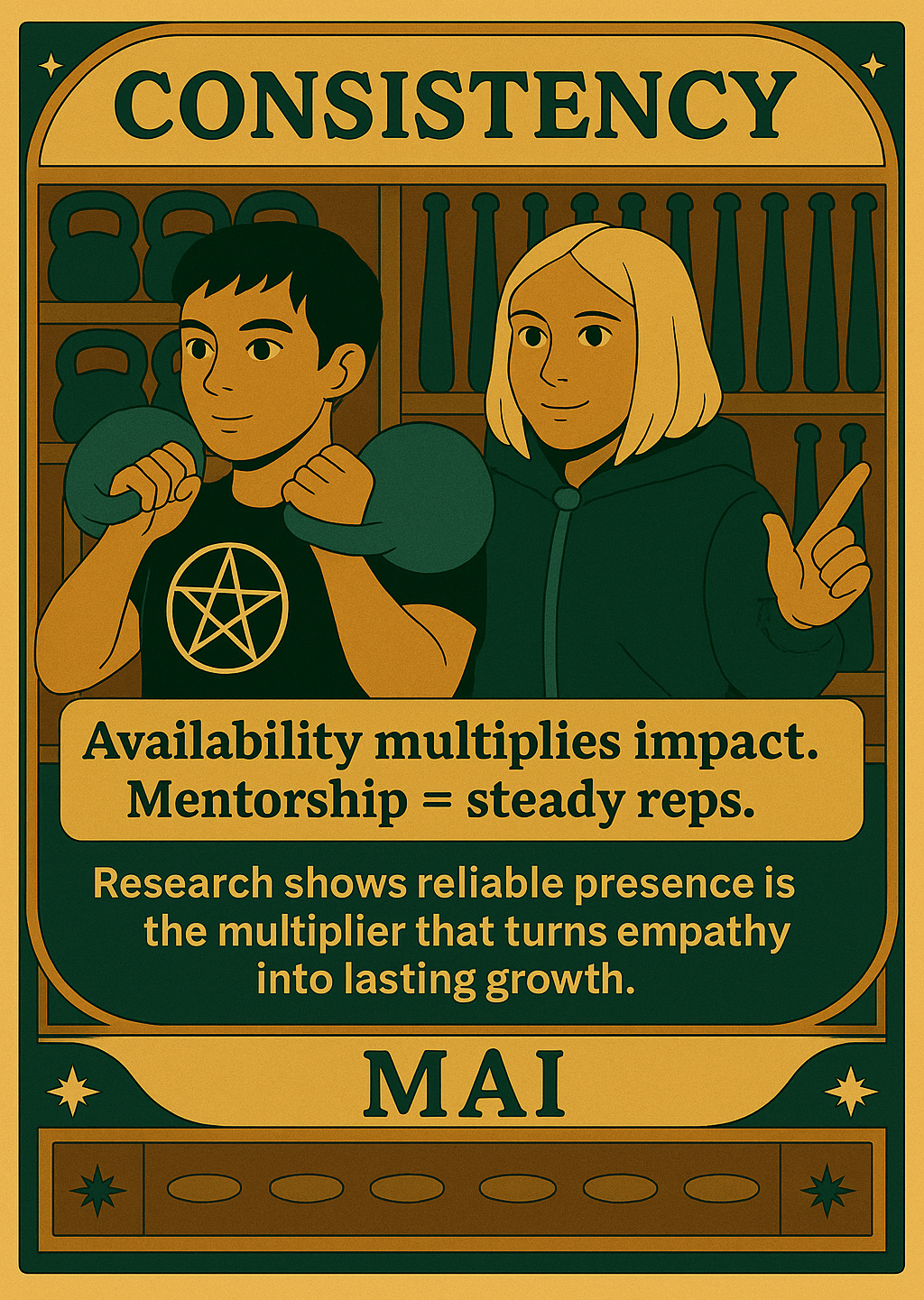
- Reliability and Availability – showing up predictably, responding consistently.
- Trust and Empathy – confidentiality, emotional attunement, genuine care.
- Instrumental Competence – providing skills, advocacy, and real-world opportunities.
- Perceived Shared Identity – a sense of common ground and experience.
- Cultural Competence – respecting and navigating difference.
Among these, availability acts as a multiplier: without consistent contact, the power of empathy or guidance fades.
Digital channels shine in reach and identity exploration. Podcasts and creator media can spark inspiration, lower stigma, and model alternative identities. But by themselves, they rarely provide the reciprocity or advocacy young men need. The strongest results come from hybrid pipelines:
- Scalable digital content to recruit and orient.
- Moderated, reciprocal small groups to practice and build trust.
- Vetted 1:1 mentoring for advocacy and access.
Risks are real. Over-reliance on parasocial bonds can foster dependency. Algorithmic bias amplifies privileged voices. Digital divides still limit access. And without safeguards—like trained facilitators, escalation protocols, and equity checks—scaled mentoring risks reproducing the very inequities it seeks to solve.
The study highlights promising case studies: Big Brothers Big Sisters adapting to hybrid delivery, corporations pairing executive podcasts with small cohorts and sponsorship, and creators converting parasocial listeners into moderated communities. Each underscores the same lesson: mentorship requires structure, trust, and reliability, no matter the medium.
The big takeaway: Mentoring isn’t about the channel—it’s about the relationship. Digital platforms can act as powerful gateways, but durable change comes when reliability, empathy, and advocacy are woven into sustained contact. For mentoring to scale ethically and effectively in the digital age, programs must design conversion pipelines, enforce availability standards, and embed safeguards.
Link to research: https://drive.google.com/file/d/1yoWX0hSf1-BF-9pPp2ajdN4Wji-m43rx/view?usp=drive_link
Leave a Reply