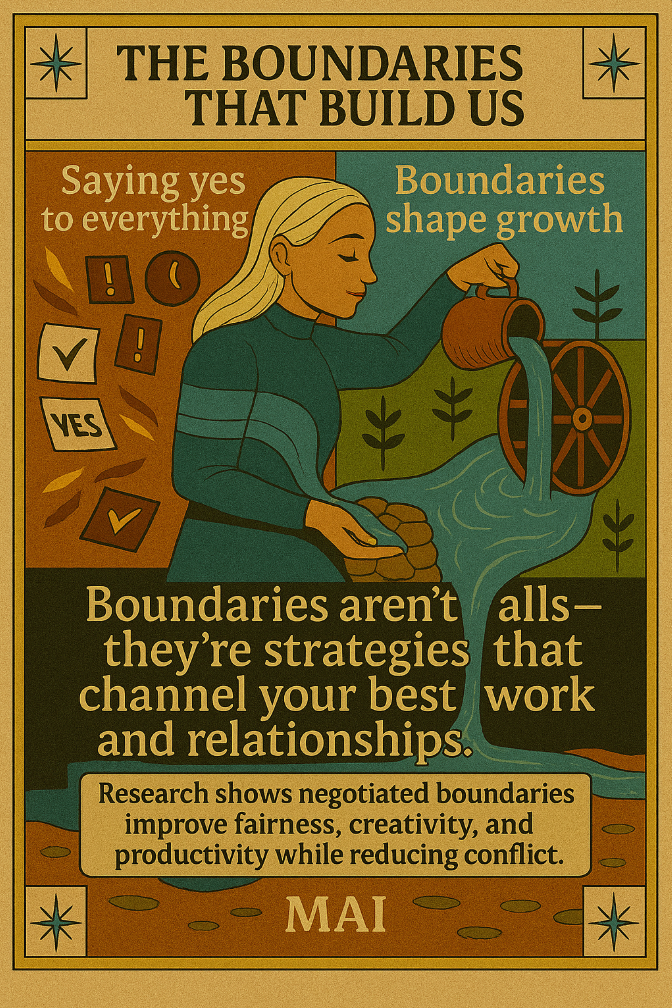
This research explores how intentional boundary practices around time, energy, and values shape men’s productivity, creativity, and relationship quality.
Time boundaries like protected focus blocks reliably boost execution. In one large field study, workers who had clear focus time improved performance by about 13%. But without guardrails, some worked longer hours, showing how boundaries can erode if not supported.
Flexible boundaries support creativity and idea generation by allowing incubation and cross-domain thinking. Yet, when left unstructured, flexibility often bleeds into overwork and blurred recovery, undermining long-term performance. The most effective model combines strict execution blocks with protected incubation windows.
Relationship quality hinges on transparency and negotiation. Couples who set boundaries together, aligning them with values, report higher fairness and satisfaction. By contrast, unilateral or hidden rules often fuel conflict or withdrawal.
The research identifies four mechanisms that explain why boundaries work:
- Reduced cognitive switching and preserved focus.
- Autonomy, which drives motivation and creativity.
- Alignment of identity and values, clarifying roles and signals.
- Preserved emotional capacity for regulation and connection.
Masculinity norms complicate uptake. Men often face stigma for setting boundaries, shaped by cultural expectations of self-reliance and constant availability. Leadership modeling—when male leaders frame boundaries as performance-enhancing—reduces stigma and normalizes adoption.
Equity and ethics are central. High-autonomy workers often benefit most, leaving frontline roles at risk of being left behind. Telemetry and data tools can help measure impact but must be privacy-preserving and voluntary.
The big takeaway: Boundaries are not just personal habits. They are relational contracts and organizational design choices. When intentionally structured, negotiated, and supported by leadership, they improve execution, fuel creativity, and strengthen relationships. Without safeguards, they can entrench overwork, strain families, and widen inequities.
Research Article – https://drive.google.com/file/d/1ddbvVsNd6HDMnauN7u9C0LhrPs1O0R14/view?usp=sharing
Leave a Reply